
Suhoor is the quietest meal of the day. No performance, no audience. Just you, the dark, and whatever you choose to eat before the fast begins. In Egyptian homes, the suhoor table is simple: bread, labneh, a few dates, maybe an egg. And, for many families, a jar of honey in Ramadan has always sat at the center of it.
That is not coincidence. It is old knowledge expressed as habit.
Why Honey in Ramadan Makes Practical Sense
Honey is one of the most energy-dense natural foods there is — predominantly simple sugars (glucose and fructose) that the body absorbs without much digestive effort. For a suhoor meal, that matters. You want fuel that sustains, not food that sits heavy and disrupts the few remaining hours of rest.
A spoonful of raw honey before the fast gives the body a slow, steady release of energy — not a spike and a crash. Paired with something protein-rich (labneh, eggs, cheese), the effect is long enough to carry you through the morning hours without the fog that hits when suhoor was too light or too processed.
This is not a medical claim. It is simply what raw honey is: a dense, natural energy source that Egyptians have eaten at dawn for generations, long before anyone used the word "nutrition."
The Egyptian Suhoor Ritual — Small, Intentional
In Ramadan, the way you eat suhoor shapes how the fast begins. There is a particular kind of calm that comes from a meal that feels considered — not rushed, not grabbed from a bag. Honey belongs in that moment because it forces a small pause. You open the jar, you take a spoon, you taste it. The aroma is immediate. The sweetness is clean and present.
We have written before about the Egyptian morning honey ritual outside of Ramadan — the everyday spoonful that anchors the start of a day. In Ramadan, that ritual becomes more deliberate. The window is short, the intention is clear. What you choose to eat at suhoor is a form of care for the day ahead.
Which Honey Works Best at Suhoor
Not all honey eats the same at 3 a.m. Heavy, thick honeys can feel rich for a light meal. What works well at suhoor is a honey that is clean, aromatic, and not cloying — one that wakes the senses without overwhelming them.
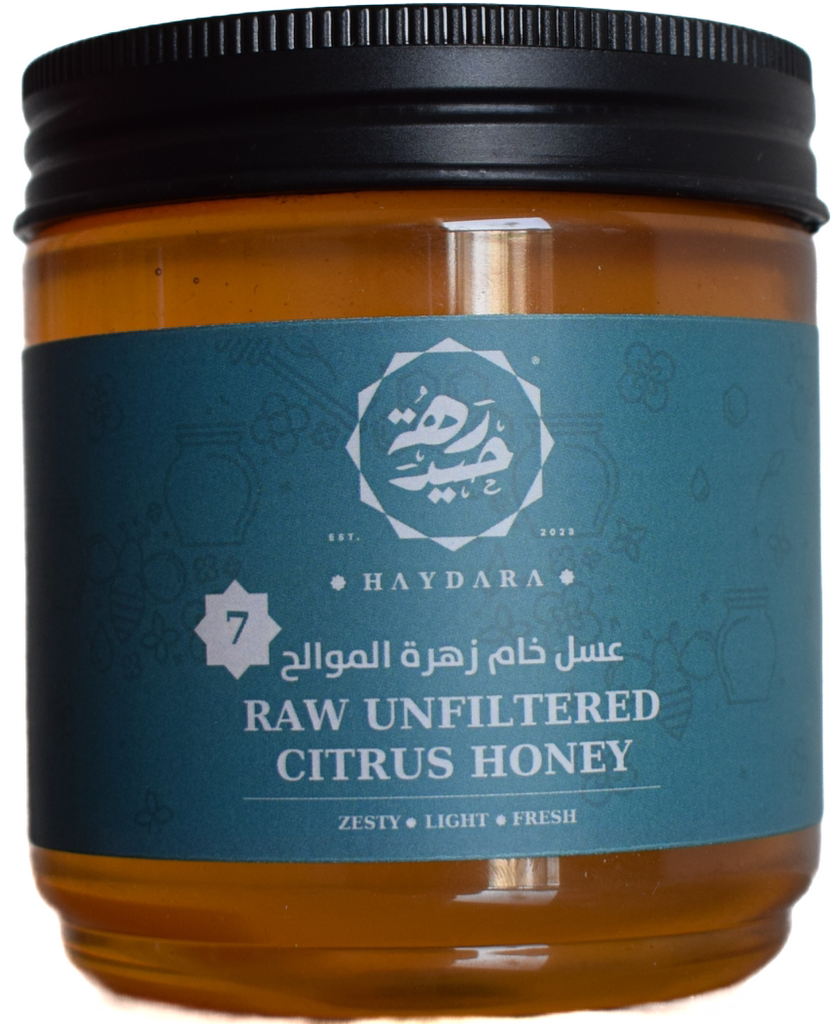
Haydara's Raw Unfiltered Citrus Honey — Hive 7, Sharkiya — 400g fits that profile well. It carries the citrus note that comes from orange blossom season in Sharkiya — a floral, slightly bright sweetness that is more gentle than sharp. It is raw and unfiltered, so the texture has body to it without being heavy. One spoon on warm bread or stirred lightly into water is enough.
The 400g jar is a practical size for the month. Enough for daily use without surplus. And because Hive 7 comes from a specific apiary in Sharkiya, you know exactly what you are eating and where it came from.
Simple Ways to Use Honey at Suhoor
There is no elaborate recipe here. The best way to use honey at suhoor is to keep it simple:
On bread with labneh. The contrast of sour and sweet is one of the oldest Egyptian combinations. A drizzle of citrus honey on thick labneh and fresh bread is a complete meal in three ingredients.
Stirred into warm water. A glass of warm water with a teaspoon of honey before eating anything else is a gentle way to prepare the stomach for the meal ahead. Light, quick, settled.
Over dates. Honey and dates together are a suhoor ritual in themselves — the natural sugars of both working together, the textures complementing each other. The slight brightness of citrus honey lifts the richness of the date.
A spoonful on its own. Sometimes the most honest use. A clean teaspoon, tasted slowly. It is enough to understand what good honey actually is. If you want to train your palate for honey, reading our guide on how to taste honey properly is a useful starting point.
A Note on Intention
Ramadan carries a particular quality of mindfulness that the rest of the year rarely has. The fast makes eating deliberate — what you choose, when you choose it, and why. That is one reason a small jar of good honey at the suhoor table carries more weight than the same honey eaten absent-mindedly on a regular morning.
Haydara was built around the idea that natural products should be eaten with care — that the source matters, that the details matter, that barakah is not a word used casually. During Ramadan, that intention aligns with the spirit of the month more than at any other time.
If the citrus honey morning routine resonated with you, the suhoor version of it is simpler and slower. It asks for less, and it gives back more.
Haydara's Raw Unfiltered Citrus Honey — Hive 7, Sharkiya — 400g is available on the website. If you are building a suhoor table this Ramadan and want something honest and traceable, order via the product page or reach out via WhatsApp.