
There is a gentler way to cook with honey, and it begins with the right jar.
Marjoram honey is one of Egypt's quietest treasures — herbal, savory at the edges, with a finish that lingers like dried thyme on warm bread. It is not a "drizzle on toast" honey. It belongs in the kitchen, where its character has room to work. Once you keep a jar near the stove, you stop reaching for sugar in places you used to.
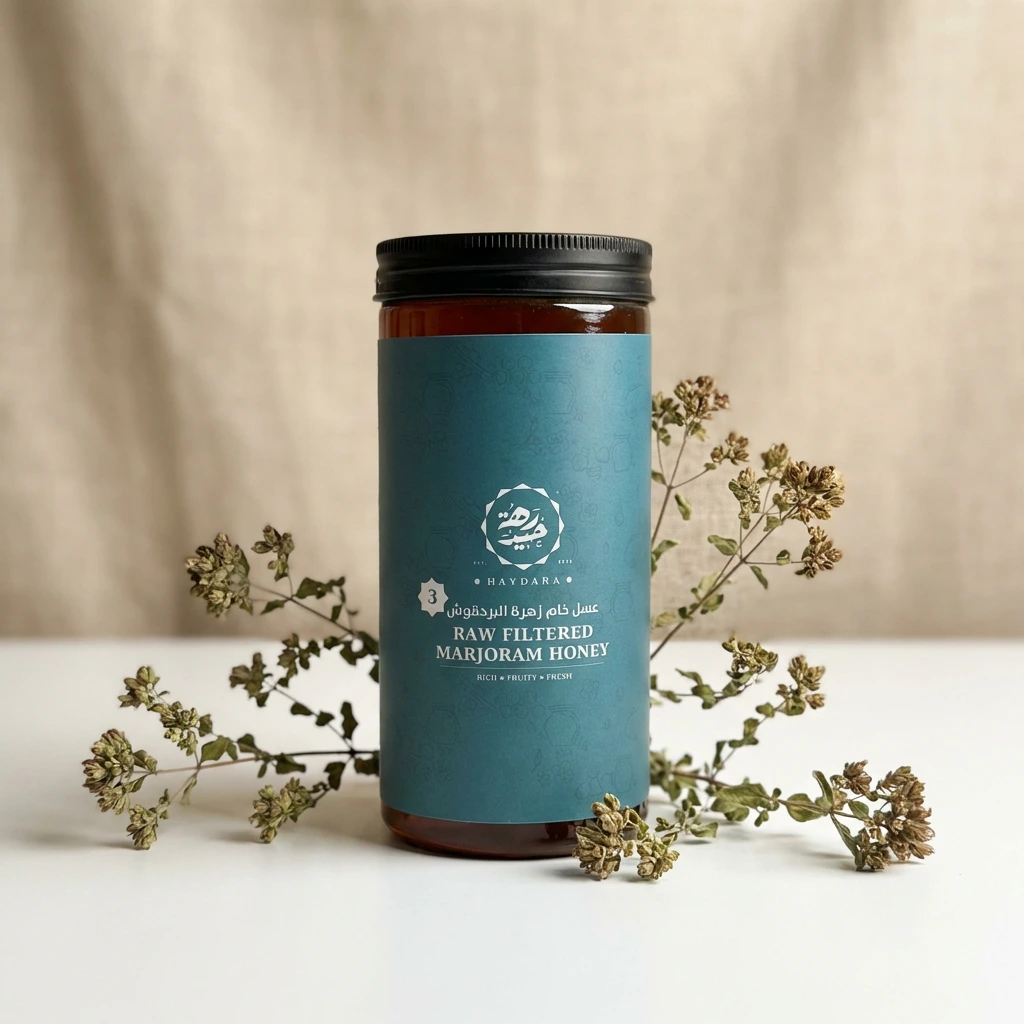
This is a practical guide. Four ways to use marjoram honey, written from a real Egyptian kitchen, with no hype and no medical promises. Just honest food.
Why marjoram honey behaves differently
Most honeys are built to be sweet first. Marjoram honey is built to be flavorful first. Bees that forage on marjoram blossoms in the Egyptian countryside carry the herb's character into the comb — lightly resinous, lightly minty, with a savory backbone that pairs naturally with herbs, citrus, and slow-cooked meats.
That savory edge is what makes it useful. Sweetness alone gets boring in cooking. Sweetness with depth gets remembered.
Our Raw Filtered Marjoram Honey — Hive 3, 800g is the jar we cook with at home. Filtered for a smooth pour, raw so the aroma stays alive. The 800g size lasts a real kitchen a long time.
1. Marjoram honey tea — the morning version
The simplest way to meet this honey is in a hot cup. Steep a cup of mint or chamomile, let it cool to drinkable, then stir in a teaspoon of marjoram honey at the end. Adding it to boiling water flattens the aroma. Adding it to warm water keeps it.
If you want something more grown-up, try it with black tea, a slice of lemon, and a single clove. The marjoram doesn't compete with the tea — it sits underneath and rounds it out.
This is the morning ritual we keep returning to. Quiet, warm, and honest. The same logic we wrote about in The Egyptian Morning Ritual: Honey, Warmth & Intention, but with a herbal twist that suits the cooler hours.
2. A glaze for roasted vegetables
This is where marjoram honey starts to surprise people.
Whisk together two tablespoons of marjoram honey, one tablespoon of olive oil, the juice of half a lemon, a pinch of salt, and a turn of black pepper. Toss with carrots, sweet potato, or cauliflower before roasting. The honey caramelizes at the edges. The herbal note holds up to the heat.
It works on halloumi too. Brush a thin layer on each side just before the pan comes off the flame.
The trick is restraint. You want the glaze to season the vegetable, not coat it. Two tablespoons feeds a tray.
3. A simple marinade for chicken or lamb
Marjoram honey was made for marinades. The savory edge means you don't have to fight against sweetness — you build on it.
A clean weekday version: three tablespoons of marjoram honey, three tablespoons of olive oil, two crushed garlic cloves, a teaspoon of cumin, a teaspoon of salt, the juice of one lemon, and a small handful of fresh thyme or rosemary. Whisk together. Coat chicken thighs or cubed lamb. Rest in the fridge for at least an hour, longer if you have time.
Cook on a hot pan, a grill, or in the oven at 200°C until the edges are deeply golden. The honey turns the surface lacquered without making the meat sweet — that is the whole point.
For a Friday lunch crowd, double the marinade and use it on a whole chicken. The skin will tell you when it's ready.
4. The end-of-night spoon
The fourth use needs no recipe.
A small spoon of marjoram honey straight from the jar, late in the evening, after the kitchen is closed and the kettle is off. It is the cleanest way to taste what makes this honey different — the herbs, the warmth, the gentle bitter finish that distinguishes it from clover or citrus.
If you have only ever tasted honey at breakfast, try this one at night. It changes how you think about it.
"Isn't raw honey expensive to cook with?"
A fair question, and one we hear often.
The honest answer: you use less of it because the flavor does more. A single tablespoon of marjoram honey carries more character than two of a generic supermarket honey. You're not paying for sweetness — you're paying for the herbs the bees foraged on, the small apiary that harvested it, and the fact that we filtered it gently and never heated it. Raw honey holds its aroma. Heated honey loses it. That difference matters most when you cook.
If you want to start smaller before committing to the 800g jar, our Raw Citrus Honey 250g is a good entry point in a different flavor — and once you understand how raw honey behaves in the kitchen, you'll know which jar to keep on hand.
A note on heat
A small thing worth saying clearly: when you cook honey, you change it. Some of the delicate aromatic compounds soften or fade. That is fine. The structure of the honey — the body, the caramelization, the savory backbone — still does the work in a marinade or a glaze. Use raw honey when temperature is gentle (tea, dressings, finishing). Use it with confidence when temperature is high — it will still be the best version of cooked honey you can put on a plate.
Just don't pour it into boiling water and expect breakfast to taste like a meadow.
Keep the jar close
The shortest piece of advice we can give: move the jar from the pantry to the counter. Honey you can see is honey you use. A spoonful in your tea, a swirl in your dressing, a brush on your halloumi — it adds up to a kitchen that tastes like care.
If you'd like to try it, our Raw Filtered Marjoram Honey — Hive 3, 800g is in stock and ready to ship. Order via the website or WhatsApp. If you're not sure where to begin, tell us what you cook most and we'll recommend the size that fits your kitchen.